Calculate home loan repayments with our Home Loan Repayment Calculator. View detailed amortization charts, compare loan terms, and plan your mortgage with confidence.
'Calculator results are estimates only and not quotes. Actual quotes will be provided by licensed brokers after you submit an enquiry.'
Home Loan Details:
Important!
Home Loan Interest Rates differ from lender to lender and will depend on your individual circumstances (credit history, employment status, age, etc.). To find out if you qualify ... and for a free, personalised interest rate and repayment quote,
please CLICK HERE
Home Loan Amortisation Calculator
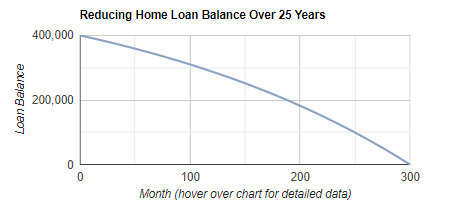
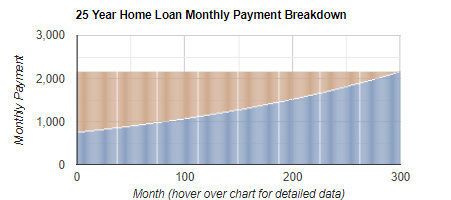
The following amortisation graphs detail month-by-month data on the progress of the proposed loan. The first chart below examines the reducing loan balance over the course of the finance contract term. The second graph illustrates the portion of each monthly repayment allocated to payment of interest vs principal reduction.
How to use our Home Loan Repayment Calculator
Our Home Loan Repayment Calculator helps you estimate your mortgage repayments in Australia and understand how a loan may reduce over time. It is useful for budgeting, comparing loan terms, and visualising an amortisation schedule (how each repayment is split between interest and principal). The calculator is designed for planning only and works best when you enter realistic assumptions.
Important information: Results are estimates only and do not constitute a quote. Interest rates and loan features vary by lender and may change. This information is general and does not take into account your objectives, financial situation or needs. Consider whether it is appropriate for you and seek professional advice if required.
How to complete the calculator fields (in order):
1. Purchase Price: Enter the property purchase price. If you expect to borrow extra for costs, you may choose to include amounts such as stamp duty, insurance, and other buying costs in this figure so your estimate reflects your likely loan size. Enter whole numbers only (no dots or commas).
2. Deposit or Equity Value: Enter your cash deposit or usable equity from another property (if applicable). A higher deposit generally reduces the loan amount and can lower repayments. Enter whole numbers only (no dots or commas).
3. Term of Loan (years): Select the number of years to repay the loan. Longer terms usually reduce repayments but increase total interest paid over the life of the loan.
4. Interest Rate (% per annum): Select an interest rate for the simulation. Use a realistic rate and consider testing higher rates to understand “rate rise” risk.
5. Calculate: Click calculate to generate your results.
How to interpret the results:
1. Repayment estimate: Use this as a starting point for affordability checks, remembering real loans may include fees and different features.
2. Amortisation charts: Review the loan balance chart to see how your balance falls over time, and the interest versus principal chart to understand how early repayments are typically interest-heavy, then shift toward principal reduction later.
3. Compare scenarios: Adjust the term, deposit/equity, or interest rate and recalculate to compare loan terms and see how changes affect repayments and total interest over time.
Fresh property market commentary suggests competition is increasingly concentrating around the more affordable end of the housing market. While premium homes may move at a different pace, many buyers are turning their attention to units, townhouses and smaller houses that appear closer to reach. For first home buyers, that shift can be encouraging, but it can also make entry-level properties feel more crowded. - read more
Recent property and finance reporting suggests home insurance is becoming a more important affordability test for first home buyers, not just a post-settlement detail. Premiums remain under pressure from severe weather risk, higher rebuilding costs and insurer pricing changes, and that can flow directly into the budget a lender expects you to manage. - read more
Recent savings market reporting suggests Australian banks are continuing to adjust high-interest savings and bonus saver accounts as the interest rate cycle changes. For first home buyers, this may sound like a side issue compared with house prices or loan rates, but it can directly affect how quickly a deposit grows. - read more
Australia’s home loan market is showing signs of renewed competition, with some lenders adjusting rates and sharpening offers for borrowers with strong applications. For first home buyers, that can sound like a welcome shift after a long stretch of affordability pressure. But one important hurdle remains firmly in the background: the serviceability buffer. - read more
Buying your first home is an exciting milestone, marked by significant decisions that can impact your financial future. One of the most crucial decisions you'll face is selecting the right home loan. Understanding the different types of loans available is not just beneficial; it's essential for every first-time home buyer. - read more
Welcome! Embarking on the journey to homeownership is both exciting and daunting, especially for first-time buyers in Australia. One vital step in this process is understanding loan pre-approval and how it can shape your path to securing your dream home. - read more
Buying your first home involves more than saving a deposit. This guide explains the upfront, settlement and ongoing costs Australian first home buyers may need to budget for. - read more
First home buyers often hear that they need a 20% deposit, but some may be able to apply with less. This guide explains how deposit size, LVR, LMI, genuine savings and government schemes can affect home loan eligibility. - read more
Knowledgebase
Certificate of Deposit (CD): A savings certificate with a fixed maturity date and specified interest rate, typically higher than a standard savings account.